
Sir Ian McKellen: On Coming Out, VR Technology, and the Magic of Theatre
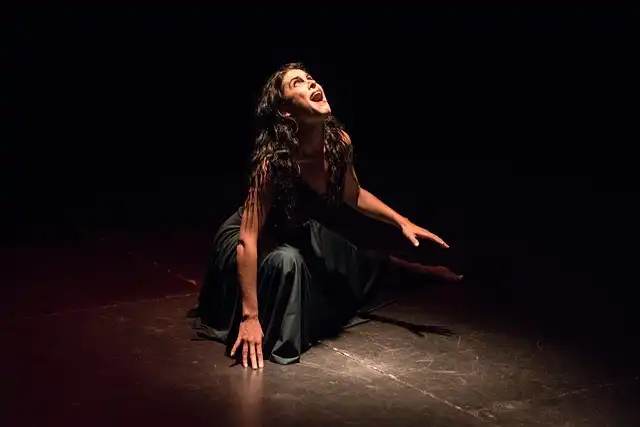
Legendary actor Sir Ian McKellen discusses the liberation of coming out, his skepticism toward VR technology in art, and his recent recovery from a stage injury while reflecting on his iconic career.
Authenticity and LGBTQ Advocacy
The day after McKellen saw “An Ark,” he took place Stephen Colbert’s late-night program and stated, from the Elizabethan play “Sir Thomas Extra,” a talk lambasting anti-immigrant belief. The four-minute clip went viral. He is as beloved by numerous for his gay-rights advocacy as he is for his proficiency of Shakespeare, but he puts on that tiara lightly. “I did it on my very own part,” he stated about coming out, in 1988, at the age of forty-nine. “Nobody was shocked. Simon Callow, that was the initial English star of any type of note to come out prior to me, needed to come out in a bio, because whenever he spoke about it, journalism wouldn’t report it.” McKellen said that he has experienced no negative aspects to openly recognizing his homosexuality. “And it maximized my emotions to no end. I ‘d constantly discovered highly emotional scenes very difficult,” he said. “I was playing Chekhov’s Uncle Vanya, and instantly I might sob at every performance. Since I was straightforward, that was all. Every little thing was much better. And life was much more fun, walking around saying, ‘I’m gaaaaaay!’ I made use of to believe it would be enjoyable to have a coming-out project like Billy Graham– that Elton and I and the Animal Store Boys and whoever else intended to, we would certainly get a large camping tent and when we arrived in your town we would certainly introduce, ‘Currently is your chance! You can stand and appear!’ ”
The Conflict Between Art and Technology
Minutes later on, McKellen remained in a boardroom, where he surveilled a tray of treats. Picking a bag of potato chips, he enthusiastically read aloud the word “Classic” from the bundle and commenced gobbling. “An Ark” was so realistic that he had actually intuitively reached out his hand when one of the characters had encouraged the audience to touch her; still, he claimed,” it is with a sigh of alleviation that I say that this medium is not going to surpass the theatre as an art kind.” He had tangled with modern technology in the early days of recording the C.G.I.-heavy “Lord of the Rings,” in 1999 and 2000: in one scene, entrusted with engaging with a team of other actors stood for just by their pictures, McKellen had mumbled, “This isn’t why I became a star,” and then he wrote a letter to the movie’s supervisor, Peter Jackson, using to stop. “I couldn’t do that scene,” he claimed. “I don’t think any kind of actor could. We found some various other way to do it.”
The ruminative top quality of “An Ark,” which is written in the second person and narrates “your” trip from birth to afterlife, is consonant with McKellen’s very own outlook. “It’s an attraction with, or an acceptance of, the truth that I am not immortal,” he claimed.
Reflections on Mortality and the Stage
McKellen had a brush with mortality in 2024, while playing Falstaff in London: he fell off the phase. McKellen and the audience member he fell on were both hurried to the hospital; McKellen suffered cracked vertebrae and a fractured wrist. “The Christophers,” a film concerning art imitation that he made with Steven Soderbergh, comes out in April, and he’ll quickly play Jacob Marley opposite Johnny Depp in a movie regarding Ebenezer Scrooge.
He had entangled with innovation in the very early days of shooting the C.G.I.-heavy “Lord of the Rings,” in 1999 and 2000: in one scene, charged with interacting with a group of other stars represented just by their photos, McKellen had mumbled, “This isn’t why I ended up being a star,” and then he composed a letter to the film’s director, Peter Jackson, providing to stop. The ruminative high quality of “An Ark,” which is created in the second individual and chronicles “your” trip from birth to afterlife, is consonant with McKellen’s own expectation. McKellen and the target market participant he dropped on were both hurried to the medical facility; McKellen experienced cracked vertebrae and a fractured wrist. The day after McKellen saw “An Ark,” he went on Stephen Colbert’s late-night program and recited, from the Elizabethan play “Sir Thomas Extra,” a monologue bawling out anti-immigrant view. McKellen stated that he has experienced no negative aspects to publicly recognizing his homosexuality.
Prior to McKellen might provide his critique of the program, he had to encounter a gantlet of schoolkids in the target market, who understood the eighty-six-year-old star not from his turns as Lear yet as Gandalf and Magneto.– by stating, “Have an appearance at ‘Bonus,’ with Ricky Gervais.”
Just how creepy: when you put on a headset to see the movie “An Ark,” at the Lost, you look at supernatural, real-seeming 3-D photos, similar to holograms, of four actors, consisting of Sir Ian McKellen. However, if you saw “An Ark” on a current Tuesday, you might have observed that a person of the various other headset-wearers in the audience was the flesh-and-blood McKellen, who was watching the film for the first time.
An exhibit in New York commemorates the work Strausfeld produced a movie theater in London over the course of greater than thirty years– designs of graphic confidence that were clean, strong, and abusive of embellishment.
1 acting2 Ian McKellen
3 LGBTQ advocacy
4 Shakespeare
5 theatre and film
6 virtual reality
« Trump’s Kennedy Center Renaming and Landmark Renovations Spark ControversyUNT Censors Victor Quiñonez Art Exhibit Amid Texas Political Pressure »