
Pablo Picasso: The Spiritual Legacy and Biblical Origins of a Master
A new exhibition in Burgos, Spain, explores the deep-rooted Catholic iconography and biblical influences that shaped the works of self-proclaimed atheist Pablo Picasso throughout his career.
It’s throughout the accumulation to the 2nd Globe Battle that the program makes its strongest situation, with the addition of works such as The Crucifixion (1932 ), influenced by a Renaissance altarpiece as a way of representing the threats surrounding the globe at the time, his Pieta-like Mother with Dead Youngster (II); Postscript to Guernica (1937 ), and his numerous dove drawings that suggest to the scriptural story of Noah, and recommendation hope and brand-new starts.
An Atheist Artist in a Holy Sanctuary
He was a self-proclaimed atheist, that eschewed his native Spain in his life time for political reasons. This week Pablo Picasso was kept in mind under a gilded 16th-century altar in a city 2 hours’ drive north of Madrid, in the existence of a host of Catholic clerics, at the opening of an event that seeks to discover the spiritual heritage, iconography and ideas that underpin some of his best-known jobs.
Bernard Ruiz-Picasso claims it is essential to keep in mind that, however a life unravels, something of the past constantly continues to be: “There’s a lot to be stated about my grandfather and the church, yet Spain was his homeland and [this show] blends with all his love and desire for peace.”
Despite Picasso’s choice to cut himself from his Catholic upbringing, his job is steeped in memories of the church in which he was elevated. Some of Picasso’s earliest works are on program, consisting of The Church Kid (1896 ), in which a white and red robed youngster is lighting a candle. According to the Vatican head of society, José Tolentino de Mendonça, that was present at the exhibition launch along with Queen Emerita Sofia of Spain, for Picasso “the Holy bible was not simply a resource of quotations, but an extensive structure of his sensibility”.
Tracing the Exhibition in Burgos
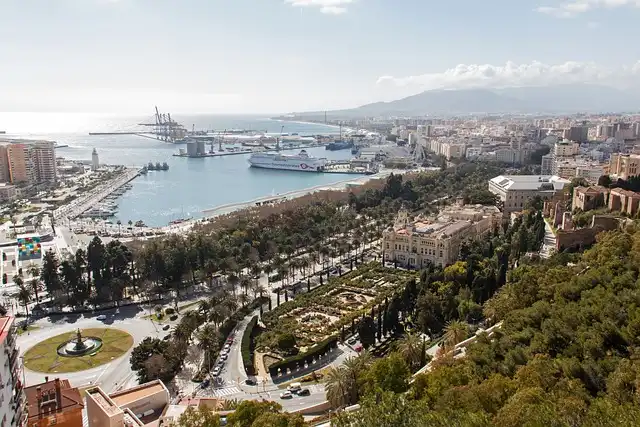
Picasso: Biblical Origins, on display from 3 March to 29 June, brings together 44 works, is the first-ever show of the artist’s work in a sanctuary, and it occurs in Burgos, a middle ages city he went to on his last journey to Spain in 1934. He was come with by his first other half Olga and teenage kid Paulo, whose very own boy Bernard Ruiz-Picasso was present at the opening.
In spite of Picasso’s choice to cut himself from his Catholic training, his job is steeped in memories of the church in which he was raised. The event’s manager Paloma Alarcò claims that Picasso was “an atheist that … was really pious”. He had his son baptised and he “always had spirituality”, distinct from “dogma”, she says.
Several of Picasso’s earliest works get on program, consisting of The Altar Child (1896 ), in which a red and white robed youngster is lighting a candle. As a teen, Picasso studied in the atelier of the devotional painter José Garnelo Alda. Though he would soon leave his standard Catholicism behind, he remained to create work with an ecclesiastical flavour, such as The Household (1920 ), a massive charcoal illustration of a household leaving church on Xmas Day. Other jobs reveal the clear impact of spiritual iconography, such as his portrait of his wife and baby kid Maternal (1921 ), which resembles a traditional Virgin and Youngster.
Biblical Symbolism in Wartime Masterpieces
During the Nazi profession of Paris, Picasso developed a collection of drawings of a man lugging a lamb, reminiscent of Christ as the Excellent Shepherd, and went back to the motif with a metal sculpture The Guy with a Lamb (1961 ). According to the Vatican head of culture, José Tolentino de Mendonça, that existed at the event launch together with Queen Emerita Sofia of Spain, for Picasso “the Bible was not merely a source of quotes, however an extensive structure of his perceptiveness”. His masterwork Guernica, which “discloses the human condition without any veil … [was] in this sense possibly the best religious painting of our time”, says Mendonća.
1 Biblical Origins exhibition2 Catholic Church
3 Picasso forgery
4 Religious art masterpieces
5 Spain National Day
6 Spiritual heritage
« US-Iran Strikes: Landsman’s Stance & Trump’s RationaleCaravaggio’s Maffeo Barberini Portrait Acquired for Rome’s Palazzo Barberini »