
Rediscovering Jazz Giants: Feldman’s Record Store Day Live Albums
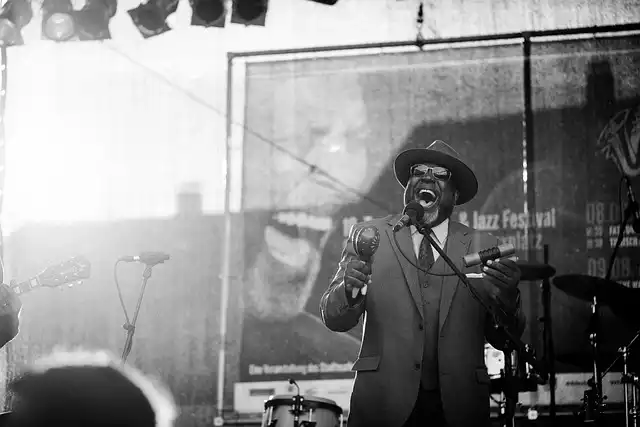
Zev Feldman's Record Store Day releases feature rediscovered 60s/70s live recordings of jazz legends Cecil Taylor, Ahmad Jamal, and Joe Henderson, showcasing their unique styles and the evolving jazz landscape amidst commercial pressures.
What follows is an electrifying outburst of energy, as Jamal pushes the pace, pulls it back to plunging cadenzas, tosses in quotes from various other jazz and pop songs, lets loose carillons of rumbling. In the very early sixties, Henderson, a tone saxophonist, emerged as a modernist on the edges of mainstream jazz, where impassioned however finger-snapping hard bop fulfilled the avant garde.
What follows is an impressive outburst of power, as Jamal pushes the tempo, pulls it back to cascading cadenzas, tosses in quotes from other jazz and pop tunes, lets loose carillons of rumbling. Jamal’s exuberant solos give surge to a marvelous, paradoxical aberration: he shows off a distinctive art of decay, damaging melodies down into little concepts that he both fanatically repeats and smartly varies, yet he likewise keeps melody main, punctuating the improvisations with identifiable pieces of the standard song, like signposts in the middle of his free associations.
Followers of Jamal’s extra and firmly organized recordings might struggle to acknowledge him in the brimming enthusiasm of this cd. If there’s something Mondrian-like in his earlier, starker sense of music geometry, at the Jazz Showcase he paints over the sharp lines with a van Gogh-esque impasto. In recent years, Feldman has actually put out three fantastic albums of Jamal’s nineteen-sixties live recordings that chart the pianist’s transition to these more expansive designs.
Taylor, of course, is one of the prime creators of so-called complimentary jazz, a category mostly specified by atonality, collective improvisation, vicious strength, and the absence of a foot-tapping beat. The expression’s mysteries– and its deep origins in timeless jazz– are reflected in the title of his composition “Fragments of a Commitment to Duke Ellington,” which fills up the entirety of this two-disk album.
The albums by Jamal and Henderson are from the nineteen-seventies, a time when jazz remained in dilemma– and their efficiencies, both tape-recorded in concert at the same place (Chicago’s Jazz Showcase), present individual feedbacks to the musicians’ very own circumstances and to the state of the songs at huge. When it comes to Taylor’s recording, from the late sixties, it specifies a strong advancement in jazz that however reconnects with the music’s practices.
I’ve long thought of the great jazz musicians synesthetically, in terms of their implicit connections to other art kinds. Taylor’s music has actually constantly struck me as bound with dance, for factors that also help explain his deep link to Ellington, past the resemblances of their percussive piano designs and their initiatives to develop initial team appears. For much of Ellington’s career, his band was a dance band, playing in night clubs and at social gatherings which weren’t primarily performances, and his structures and plans were designed to establish people moving. Taylor didn’t make his job betting dancers (though he did, in 1990, come with a choreographed dance performance), yet his songs does similar thing, in significantly different ways that take a little bit of teasing out. Taylor’s way of playing the piano stimulates dancing in its motions, and he prompts the same result from the entire group. At the keyboard, he does not swing; he slides and stumbles, jumps and thrusts and spins and jitters, releasing torrents of notes at astonishing rate, fragmentizing his rhythms to their vanishing factor. His free songs manages to be intensely rhythmic nonethelesss, in such a way that’s drastically different from the familiar beats of foot-tapping jazz. His efficiencies direct metabolic undulations, similar to breathing with the whole body, and they are liable to get even audiences in their seats, at home, relocating along. By the end, an audience must really feel not just exhilarated yet likewise worn down.
Notably, the very first track on the new cd, “Mr. P.C.,” is a Coltrane composition, an assertive romp that, a min and a fifty percent in, currently conjures a sense of having actually gone much quick. With droning and buzzing, wild high rasps and groans, fragmented and juddering expressions, yells and barks and split notes, beelike buzzing and stressful squalling, Henderson uses the sound-world of the avant-garde underpinned by songful riffs and a foot-stomping beat. At times, as in his solo on his own make-up “Inner Urge,” these sound-shredding aspects reach strident extremes untempered by thee balanced enhancements of his bandmates– the pianist Joanne Brackeen, the bassist Steve Rodby, and the drummer Danny Spencer– that are acutely receptive partners in the high-spirited clamor.
What the briefer version likewise does not have is the feeling of endurance, of athleticism that’s at the heart of Taylor’s music. He was lean and fit, as the album’s pamphlet and cover images attest, and he remained so throughout his career. (I saw him, when he was nearing eighty, have fun with whirlwind rumbling for a fifty percent and an hour, without disruption, amidst the divine noise of his fifteen-to-twenty-piece big band.) Taylor’s music has a brave, significant feeling of time; it occupies time the manner in which an organized spectacle occupies space, and, because of this, the forty-nine-minute night collection of “Pieces” seems slight, whereas the hour-and-a-half-plus variation, for all its body-seizing and mind-wrenching strength, fits correctly in its measurements. Taylor, that had actually currently made eleven studio albums, starting in 1956, hadn’t videotaped any since October, 1966. As fantastic as a number of them are– especially, the last of that group, “Conquistador!”– this Paris performance is the earliest recording yet released to expose the large range of his aspirations. ♦
Henderson’s job launched later on than Jamal’s however bore specific similarities. In the very early sixties, Henderson, a tenor saxophonist, emerged as a modernist on the sides of mainstream jazz, where fervent however finger-snapping tough bop fulfilled the avant garde.
Record Store Day Jazz Treasures
To note the most current Document Shop Day (April 18th), working with a variety of labels, he has actually brought forth prizes that both strengthen the background of jazz and increase the art form’s creative array. Rock was replacing the show-tune-based Fantastic American Songbook– Jamal’s prime resource– as the musical mainstream, and by the seventies preferred jazz was greatly touched with “fusion” components (electrical tools, borrowings from rock and R. & B.) that usually came at the expenditure of improvisated solos. The new cd, “At the Jazz Showcase: Live in Chicago,” includes online efficiencies from March of 1976 that sound like a rebellion against commercial concessions.
Ahmad Jamal’s Evolving Career
Jamal began his recording profession in 1951 with a style of piano playing so unusual that it was typically blatantly misinterpreted and ignored (consisting of, in 1958, in the pages of The New Yorker). Eschewing the profusion and intricacy of the age’s bebop pianists (primary, Bud Powell), Jamal played sparely, producing arrangements for trios that served as backgrounds for his improvisations of elegant motions and stark strokes, sharp punctuations and witty melodic purifications. He neither come with other musicians nor had wind-instrument sidemen in atrioventricular bundle. But, by the mid-sixties, Jamal’s style changed. Collaborating with a brand-new, looser generation of drummers, he went from limited to overruning, playing denser and much more emphatically meaningful solos, albeit without giving up wit or melody. That improvement came at a cost: in the late fifties, Jamal had actually delighted in great industrial success, however in the following decade his popularity waned. The trouble wasn’t his alone. Rock was replacing the show-tune-based Fantastic American Songbook– Jamal’s prime source– as the music mainstream, and by the seventies prominent jazz was heavily touched with “combination” components (electrical instruments, loanings from rock and R. & B.) that commonly came with the expenditure of improvisated solos. Jamal acceded to the fad and made a number of electric-based cds in pop settings that ranged from funk to simple listening. Yet the new cd, “At the Jazz Showcase: Stay In Chicago,” features live efficiencies from March of 1976 that seem like a rebellion versus commercial giving ins.
My only complaint regarding the new cd is that the 2 versions of “Fragments” are provided in reverse chronological order– beginning with the night set, which runs forty-nine minutes, and adhered to by the afternoon one, which is almost two times as long. In the longer one, the quartet’s members have a lot more solos and create a larger range of moods, revealing the excellent variety that arises from their relatively uniform and tremendously intricate style.
Joe Henderson’s Unique Approach
Like nearly every major tone saxophonist of his generation, Henderson was affected by Coltrane, yet Henderson took in that impact and transformed it into a mark of his very own originality. He tackled necessary components of Coltrane’s audio– the long low-note honks and grumbles and shrill screeches and wails– and he was motivated by Coltrane’s vehemence, how his energies from deep within seemed to break out with negligent, self-revealing eagerness. Yet where Coltrane is an all-natural complexifier, loading chords on chords and notes on notes and developing enormous ins and outs also within jaunty expressions, Henderson is a simplifier, planing the harmonic field in order to rush in advance all the more ebulliently. Coltrane builds vertically, layering and intertwining the music into elaborately interlocking spirals; Henderson tosses out information and dashboards with them, producing sonic landscapes for his relentless improvisational journeys.
The Significance of Archival Jazz
As far as business holidays go, Document Shop Day is a virtuous celebration, due to the fact that videotaped songs is among the marvels of the world, and the survival of physical media is crucial to the future of art. In the realm of jazz, the holiday’s hero is the producer Zev Feldman, that is in charge of a lengthy and transformative run of launches from previously unavailable historical sources. To note the current Document Shop Day (April 18th), dealing with a range of labels, he has yielded prizes that both strengthen the background of jazz and expand the art kind’s creative range. Three of the brand-new collections (also offered on CD and by means of digital download on April 24th) deal revelatory experiences of artists whom I have actually been listening to for 50 years– Cecil Taylor, Ahmad Jamal, and Joe Henderson. Fascinating old recordings are rediscovered year in and year out, yet it is unusual for new access in considerable discographies to feel instantaneously canonical.
Henderson likewise provides one of one of the most lovely and unusual renditions of the traditional modernist ballad” ‘Round Twelve o’clock at night” that I have actually ever listened to. It begins with his unaccompanied solo saxophone; after that, signed up with by the remainder of the quartet, he bumps the pace as much as a lively stride and provides solos with thrilling velocity and strength to match. He ends an additional ballad, “Greetings Heartache,” with another unaccompanied and totally free cadenza that dives into the wild area, buzzing and yodeling. I’ve listened to many of Henderson’s cds from early in his occupation with the seventies, and long beyond. The new one is what I would certainly play for a Martian that needed to know the power and the flexibility of Henderson’s art.
1 Ahmad Jamal2 Cecil Taylor
3 Jazz Legends
4 Joe Henderson
5 Live Jazz Recordings
6 Record Store Day
« Marian Goodman Gallery Closes LA Outpost Amid Volatile Art MarketThe Kardashian Phenomenon: Archetypes, Influence, and Digital Fame »