
Airplane Seat Reclining: Etiquette, Economics, and Personal Space Dilemmas
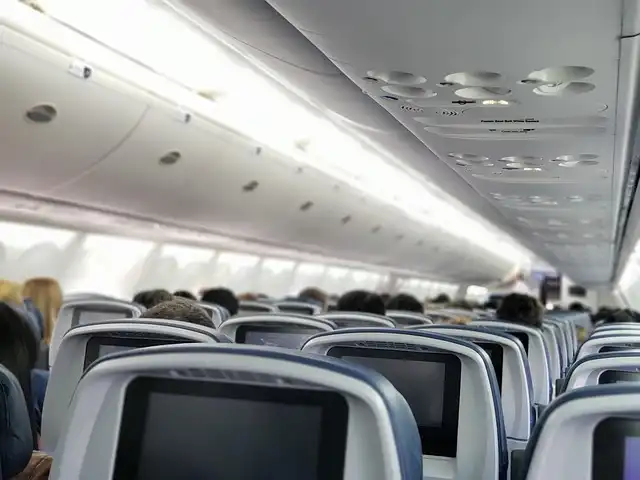
This text examines the contentious issue of airplane seat reclining, referencing Strawson's theories, the infamous Knee Defender incident, and the concept of peripersonal space. It explores social dilemmas, passenger surveys, airline economics, and potential design solutions for improved in-flight comfort.
Reactions to Harm: Strawson’s Theory
In a prominent essay, “Liberty and Bitterness,” from 1962, the theorist P. F. Strawson explained 2 methods of reacting when individuals harm us. In the average course of occasions, we comply with hints from our “responsive mindsets”– temper, worry, forgiveness, and so forth– which emerge naturally when we involve with other humans. Additionally, we can adopt “the objective attitude,” seeing the offender as based on pressures more than himself. If you resent another person of what he’s done to you, Strawson recommended, you may claim, “He didn’t mean to,” or, “He could not assist it”– feedbacks that explain what’s occurred while keeping the self-governing personhood of the perpetrator. Or you could assume something like, “He’s intoxicated”– in which case the “he” that damaged you is somehow unique from the normal variation. You might, simply put, conclude that the individual you’re running into in coach is meaningfully different from the individual you may come across in average life, and cut him some slack.
From there, events spiralled. Coastline got rid of the Knee Protector, but then became furious when the lady reclined vigorously, running the risk of damage to his computer system. He faced her, pressed her seat forward, and attempted to reinstall his gadget, at which point she reversed and threw her soft drink in his face. (An essential reality: “Both travelers were being in United’s Economic climate And also area, which provides 4 even more inches of legroom than the remainder of instructor.”) The airplane was diverted to Chicago, where it was fulfilled by authorities, and information coverage of the event “began a wide public conversation of whether guests should be permitted to recline,” Scott Mayerowitz created. Looking back, Beach recognized that he was “embarrassed and ashamed” regarding what had happened. “I said a lot of points I shouldn’t have claimed,” he concluded. “I could have handled it so much better.” Obviously, the “I” on the plane and the “I” on the ground were quite various.
According to this theory, leaning back is like putting your bag on a seat: it denies your neighbor of area. When you recline, you’re not preventing a person from occupying area– you’re intruding on space they already occupy, an act with a totally different vibe. The “sufferer” of your reclination, at the same time, can conveniently claim some countervailing space by using their own recline button.
On the aircraft, you’re hemmed in by the selections of your fellow-passengers; by the physical restrictions of your atmosphere; and by the financial factors to consider that have actually funnelled you right into your specific seat on the plane. The question is whether you’ll do so by claiming more room, or by defending what you have.
Everything would certainly be less complex if guests made a consentaneous decision: recline, or otherwise. Appropriately, some airlines have developed cabins in which all the seats are “pre-reclined” to the same degree. Regrettably, there is no such point as an evenly suitable degree of recline. It’s not just that individuals differ in their preferences (which they do). Functional designs study has revealed that, when people are concentrating on a task (working, enjoying TV, consuming), they often tend to favor a slight recline; when they are attempting to remainder, they recline even more. And one of the most vital determinant of comfort may be activity: physio therapists typically say that “the most effective posture is the following stance.” (In some cases, you just require to lean back for a minute.) This suggests that creating no-recline cabins offers a simple compromise: social harmony comes with the cost of convenience.
The Infamous Knee Defender Incident
That might appear unlikely. Consider what happened on August 24, 2014. James Beach, a six-foot-one business owner from Denver, got on the Newark-to-Denver leg of a return trip from Moscow. He required to obtain some work done, therefore opened his folding table and his laptop; he likewise released a device called the Knee Defender–” a $22 gadget,” the Associated Press reported, “that connects to a guest’s tray table and protects against the person in front from reclining.” Coastline– who informed Scott Mayerowitz, the A.P. press reporter, that he never reclines his seat (” You have the right, but it seems impolite to do it”)– didn’t alert the woman in front of him to what he would certainly done. (When making use of the Knee Protector, he described, “I ‘d rather simply kind of let them believe the seat is damaged, as opposed to start a battle.”) She flagged down a trip assistant, and the jig was up.
In 2014, when FiveThirtyEight asked around a thousand fliers what they believed regarding reclining their seats, forty-one per cent of them stated that reclining was discourteous. According to Jones’s survey information, roughly half of fliers find reclining so remiss that they just won’t do it; one more 3rd think it to be disrespectful however will still often recline; and the rest locate absolutely nothing wrong with reclining. If Alice reclines all the method, Bob could initiate a three-quarters recline, followed by Carla, that reclines just midway, up until Dan stops the pulse by refusing to recline on concept. Comfort designs research has shown that, when people are concentrating on a task (working, viewing Television, eating), they often tend to choose a small recline; when they are attempting to rest, they recline further., and an additional asked yourself if there was a detainee’s problem of reclination: If you were a prudent operator, you would certainly claim to be against reclining while secretly reclining on your own.
Invading Peripersonal Space on Flights
The counterpoint is that not all comforts are physical, and neither are all discomforts. When a seat is reclined before you, it can trigger distress also if it doesn’t touch you or your things. It invades what’s called your peripersonal area– specified, in a 2020 paper by a team of psychologists, as “the area surrounding the body where we can be or reach reached by exterior entities.” We don’t like it when individuals or things lunge into that space, and our sensitivity to incursions can be increased by stress and anxiety and various other aspects. In a 2021 research study published in the journal Mathematical Troubles in Design, 5 scientists based in Xi’an, China, surveyed a couple of hundred individuals concerning their flying experiences, and identified fourteen primary kinds of “individual room invasions,” or P.S.I.s. In their version, the higher your P.S.I. burden, the more really you really feel each limited increase: if the armrests are as well narrow, and there’s an odd smell, after that you’ll discover a lying seat even more irritating. Interpersonal difference makes whatever worse: a family member in your space is one thing, and a complete stranger is another. If you’re a lady, it’s even worse when a guy leans back, and the other way around.
“Stop that,” you listen to the daddy state. The kid, incredibly, quiets down. The cabin lights lower. It’s time to sleep. Just as rest shuts in, you sense motion: the seat in front of you is reclining. You view as it comes right back. Currently you feel cramped, with somebody else’s seat in your face; you also observe some stiffness in your shoulders. Your fingers caress your own recline button. Undoubtedly the reclined-upon are qualified to recline? Just as you begin to lean back, you hear a clearing throat. You reverse, and see the father, that fixes you with his gaze. “Excuse me,” he claims. “Would you mind keeping your seat up?”
The Social Cascade of Seat Reclining
This latter, chain-reaction facet of seat reclining makes it even more filled. You can recline without troubling anyone if you rest in first course. (From this perspective, component of what you’re paying for is a sense of moral peace.) For everybody else, exercising the option to recline pressures the individual behind them to make a comparable option. Arguably, a heavy ethical weight problems the person in the bulkhead seat, because if they lean back, they take the chance of starting a cascade of responses. Picture this cascade in your mind’s eye– what does it look like? According to Jones’s survey information, about half of fliers discover reclining so guilty that they just will not do it; one more 3rd think it to be rude but will certainly still sometimes recline; and the remainder discover nothing incorrect with reclining. Psycho therapists speak about “social licensing” (if you see somebody doing something forbidden, you’re most likely to do it), and ethicists contemplate the concept of proportionality (the larger your injury, the bigger your action, and the other way around). We may picture pulses of recline propagating rearward from unrepentant recliners. If Alice reclines completely, Bob might start a three-quarters recline, adhered to by Carla, that reclines just halfway, up until Dan quits the pulse by refusing to recline on principle. He allows the uprightness of Enid and Frank, up until Geoff decides to exercise his reclinatory rights, initiating a brand-new pulse.
In 2014, when FiveThirtyEight asked around a thousand fliers what they assumed concerning reclining their seats, forty-one per cent of them stated that reclining was disrespectful. That number appears to have risen: in 2022, Eric Jones, a mathematics teacher who creates about travel statistics on the web site The Traveler, carried out a similar study, and found that seventy-seven per cent of participants objected to reclining. Not long back, I conducted a tiny household poll, and those existing were unanimous in declaring that they never reclined their seats.
Airline Economics & Shrinking Legroom
It’s very easy to presume that the airlines have actually robbed us of area out of pure greed. The economics of air travel suggest otherwise. It’s true that, in the seventies and nineteen-sixties, seats had more legroom– but, at that time, air-cabin styles were extra greatly managed, and tickets were extra pricey and had to be booked through travel agents. Today, we buy flights ourselves, and budget-conscious leaflets are equipped to seek small cost relentlessly. Airline companies deal with them by offering small, affordable seats, using legroom as an add-on to those happy to pay for it.
When it comes to reclining our seats, however, the airlines have actually abandoned us to turmoil. The seat-reclination inquiry has no noticeable global answer; reasonable people can disagree concerning it, not just with one an additional however with themselves over the course of a flight. The details matter, and yet we recognize practically absolutely nothing about the minds or bodies of the individuals sitting in front of or behind us; ideally, we would certainly make choices based on our worths, however we’re grouchy, exhausted, and immersed in an artificial setting.
Seat reclination raised concerns of complicity, obligation, and determinism; it subjected the gap between what’s allowed and what’s great; it suggested the inescapable difficulties created by the workout of individual civil liberties., and another asked yourself if there was a detainee’s predicament of reclination: If you were a canny driver, you would certainly claim to be versus reclining while covertly reclining on your own.
Considering that the nineteen-seventies, legroom in the normal economic climate seat has actually decreased by anywhere from 2 to five inches. Grownups, on average, have actually gotten bigger, which makes being in an airline company seat even much less comfortable. Rising checked-luggage charges have likely led even more individuals to stuff their bags under the seat in front of them, better lowering legroom.
Redesigning for Passenger Comfort
There’s a crookedness right here worth home on. Reclining your seat can make you feel much better physically; on the other hand, with some exemptions (crunched knees, fractured laptops) being leaned into is generally an emotional injury. Theoretically, it should be possible to make being reclined upon even more bearable with compensatory ways. Shabila Anjani, a researcher in the industrial-design program at the Delft College of Modern technology, has actually placed individuals right into a dummy aircraft, conducting comfort studies and in some cases determining their heart prices while they inhabit seats with differing degrees of size and “pitch” (the technological term for the range in between rows). She located that “the level of comfort of sitting in an 18-inch-wide seat was virtually the same as being in a 17-inch-wide seat with 4 inches added pitch”– simply put, an inch of width is worth four inches of legroom. This may be due to the fact that “all body components besides the buttocks” are “dramatically influenced by seat width” (butt convenience depends mainly on the quality of the seat pillow). With ease, this makes good sense; if your body has more room to move back and forth, you can take up much less area front to back.
Life has lots of moral dilemmas, some more substantial than others. Should you eat meat? While you determine, the lives of numerous pets hang in the balance. Will you make use of Claude to create your cover letter? While you ponder, your integrity is at risk. In contrast, seat reclination is small-scale. Just a few inches go to risk, perhaps for simply a few hours. And yet that little wedge of area and time looms large: whether you confiscate it appears to suggest something concerning just how you treat other individuals, or perhaps conceive of culture in general.
After a long drive to the airport, you have actually simply taken off on a fifteen-hour flight. As the trip continues, the kiddo grows uneasy. She kicks your seat and pokes her playthings right into your shoulder.
Suppose we’re gladly stashed in the largest economic climate seats imaginable. The lower line is that reclining is a social act in an atmosphere of social anxiety. It’s typically directed out that, in economic terms, the airlines have actually marketed the very same inches of space twice– as soon as to you, and as soon as to the person behind you.
All of which recommends that your finest wager might be to attempt to fly on airplanes with somewhat bigger seats. Boyd determines the Airplane A220 and A320, along with the Embraer E175 and E190, as models with economic situation seats that are eighteen and even nineteen inches throughout. Perhaps, on such airplane, we can all be a little more unwinded regarding reclining.
1 airline economics2 airplane seat reclining
3 in-flight etiquette
4 Knee Defender
5 personal space
6 travel dilemma
« Rachel Aviv on Mother-Daughter Stories, Revisions, & Her New Yorker EssaysRaven Halfmoon: Caddo Ceramic Art and Identity at Ballroom Marfa »